 BD 1 --- | ---
BD 3
BD 1 --- | ---
BD 3
 BD 1 --- | ---
BD 3
BD 1 --- | ---
BD 3
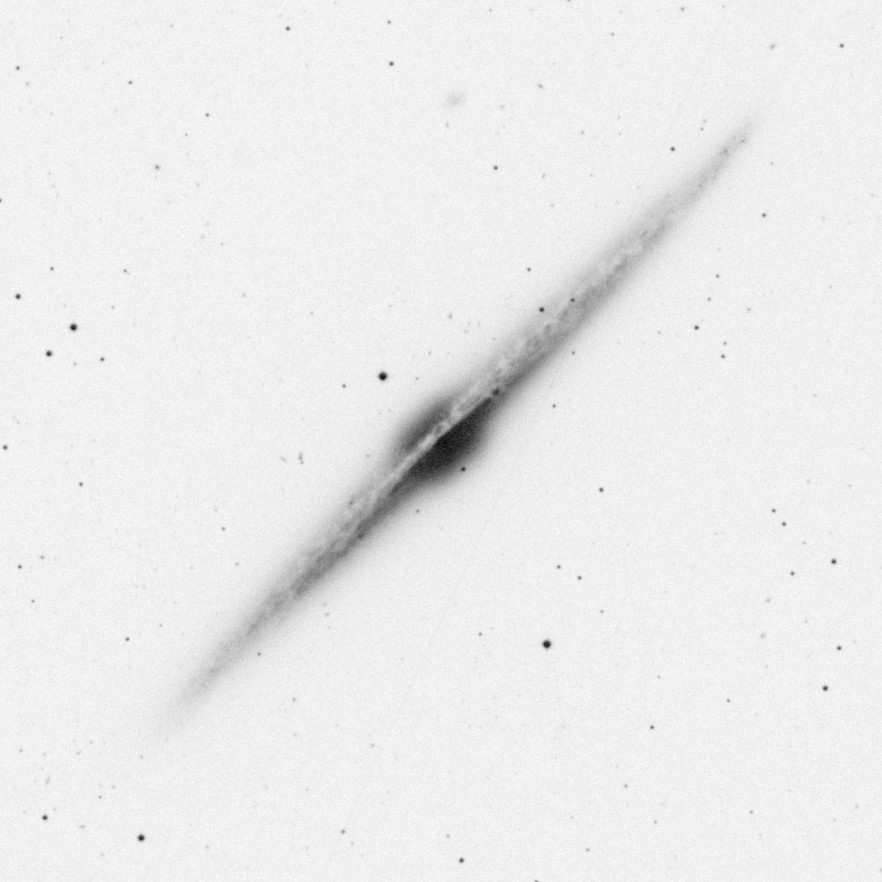
Disk galaxies become progressively fainter as one moves outward in radius from the centre - there are lower densities of stars, gas and dust at large radii Next
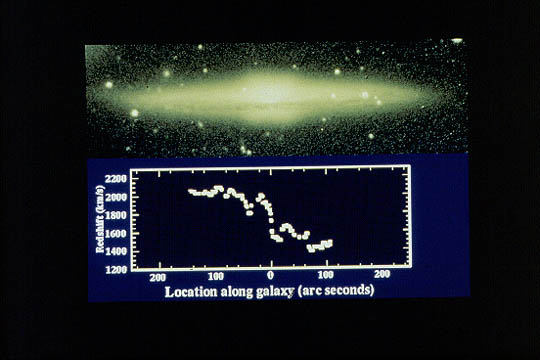
Tracing the rotation curve - how fast the material is orbiting within the
Galaxy - one would expect the velocity to decrease as the light decreases, and we run out of
galaxy.
However, rotation curves generally stay flat. The commonly accepted explanation is that there is
material present which we can't see - dark matter.
Brown dwarfs can have extremely low luminosities - if they were present in sufficient numbers,
they could supply this `missing mass'.
How many are there in the disk of our Galaxy? Next
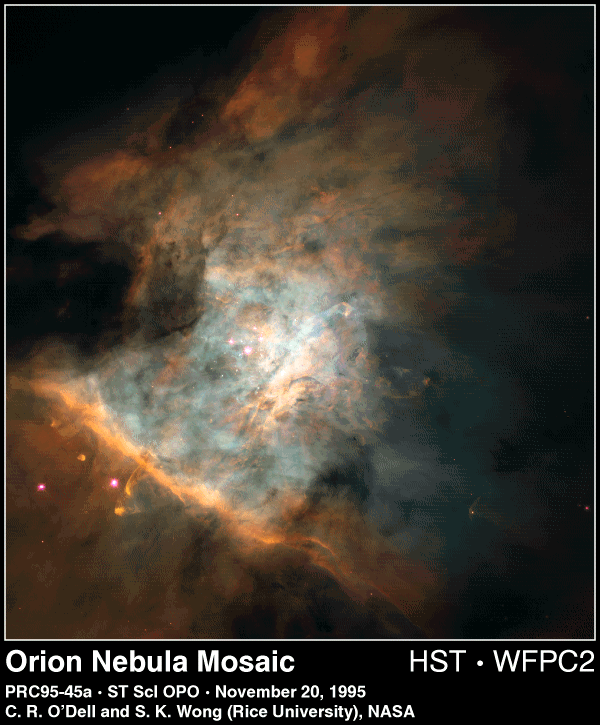
A second fundamental question is, how does a molecular cloud redistribute itself to
form stars?
In general, massive stars are rare; solar type stars are moderately frequent; low-mass stars
are very common.
Does this sequence of increasing number with decreasing mass continue into the brown dwarf regime?
BD 1 --- | ---
BD 3