
NASA’s Webb Reveals Dynamic Panorama of Star Formation
Summary
One of the largest Webb images released to date
A stunning view of nearby star-forming region IC 348 reveals an active scene of newborn stars sculpting the environment surrounding them, as well as the smallest brown dwarfs ever discovered. NASA’s James Webb Space Telescope’s deep observations of the region found brown dwarfs with masses as low as twice that of Jupiter, offering new clues, and new challenges, for understanding how stars and planetary-mass objects form. The observations offer a glimpse into one stage of the stellar lifecycle that Webb is exploring across the universe, from the birth of stars and planets to their eventual death.
Full Article
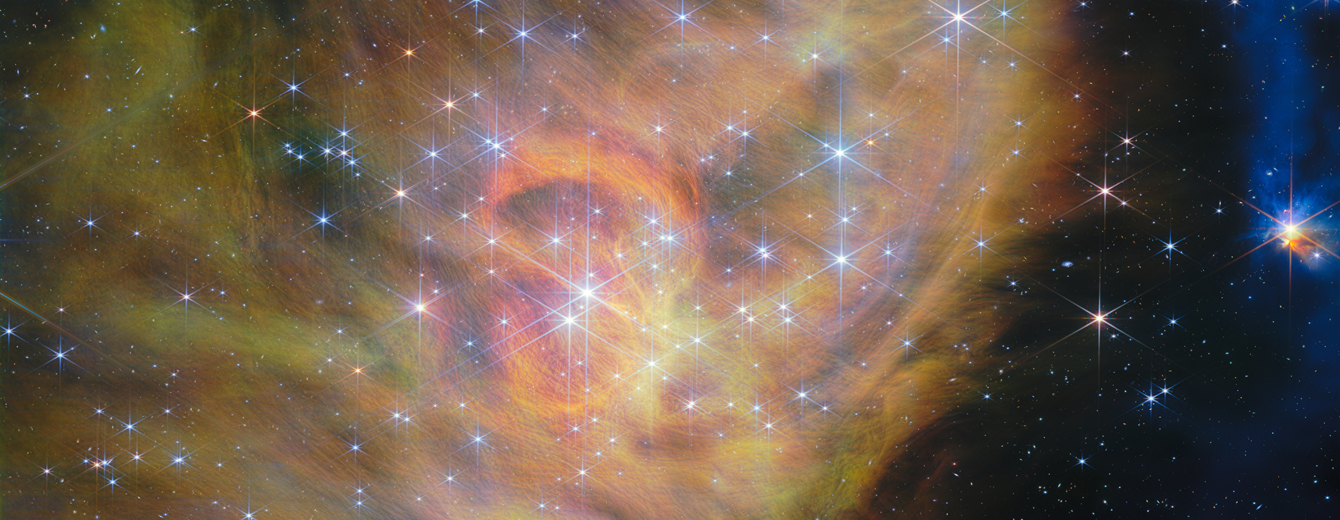
This starry view of the nearby star-forming region IC 348 is one of the largest images released to date from NASA’s James Webb Space Telescope. Using Webb, astronomers searched IC 348 for brown dwarfs, which are less massive than the smallest stars. The researchers discovered brown dwarfs just twice the mass of Jupiter, bringing the study of these curious objects into a new mass range and revealing new insights about the star formation process. The star-forming region IC 348 is located just 1,000 light-years away in the constellation Perseus. In regions like IC 348, cold clouds of molecular ...Visit NASA Science to view the full news release including article text and associated Webb imagery, graphics, scientific visualizations, videos, captions, text descriptions, and other information.
News releases highlighting the discoveries of NASA’s James Webb Space Telescope are produced for NASA by the Space Telescope Science Institute (STScI) in Baltimore, Maryland, under NASA Contract NAS5-03127. News release content is developed by the News Team in STScI’s Office of Public Outreach.
News Center Prefooter
Inbox Astronomy
Sign up to receive the latest news, images, and discoveries about the universe:
Contact our News Team
Ask the News Team