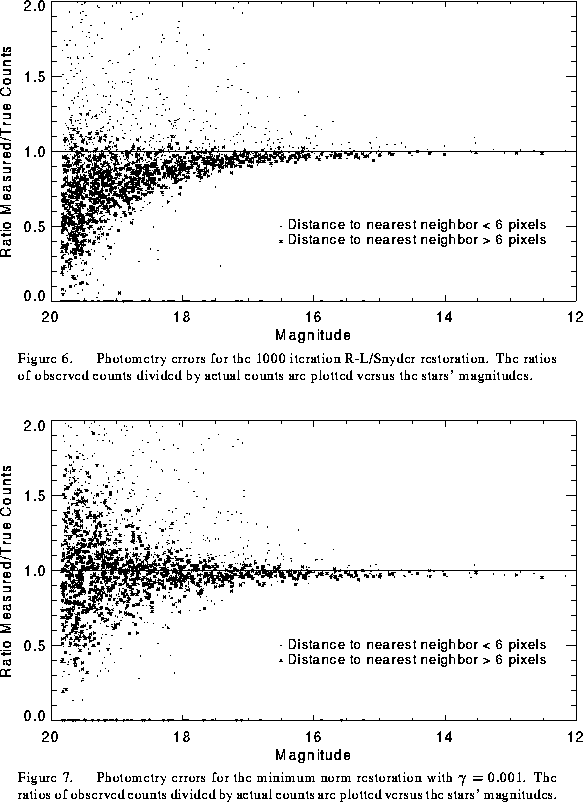
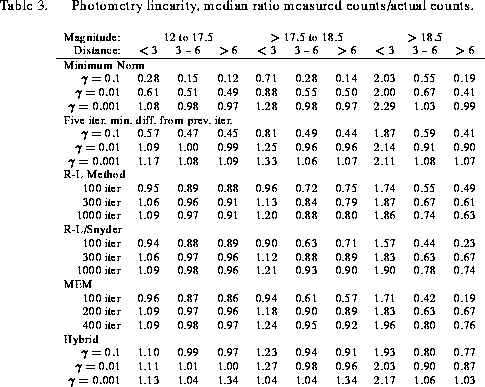
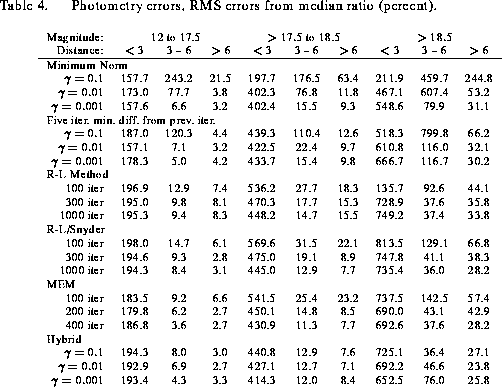
Star detection is much more successful in images restored with the non-linear methods. Numerous artifacts in the linear restorations make detection of fainter stars difficult. The non-linear methods also give better astrometry results than the linear methods. The linear methods give more linear photometry results while the non-linear methods give photometry results with less RMS scatter. The hybrid approach is a good compromise giving linear flux measurements with a RMS scatter less then the linear methods.
The following approach is recommended for performing aperture photometry in restored PC images:
We would like to acknowledge the suggestions and expert advice of the Space Telescope Science Institute's Image Restoration Project staff. This work has been supported by NASA contract NAS5-32076 funded by the Ultraviolet, Visible and Gravitational Astrophysics Research and Analysis Program.