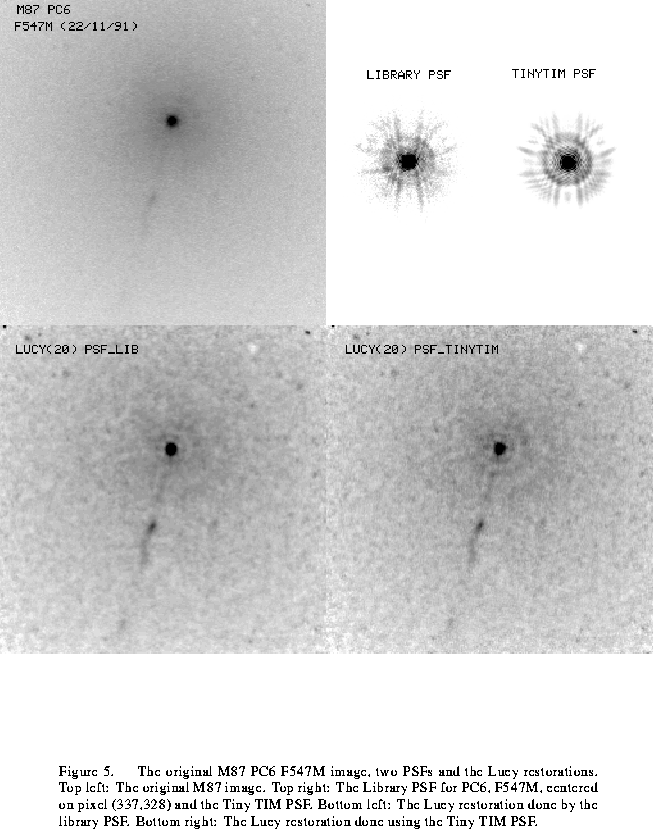
Two sets of restoration experiments have been done using the accelerated Richardson-Lucy method as implemented in STSDAS (200 iterations). In order to compare the quality of empirical vs. model PSFs, the R136 image was deconvolved using a) the PSF determined empirically from a star in the same image, b) a PSF from the WFPC PSF Library, and c) the Tiny TIM PSF. Then, in order to determine the quality of the Library PSFs and sensitivity to the space variance of the WFPC PSF, the R136 image was deconvolved using Library PSFs for three different positions in the field of view. Fig. 1 shows the normalized PSF images, with the three Library PSFs in the top row, the empirical PSF from the R136 image at bottom left, and the Tiny TIM PSF at bottom right.
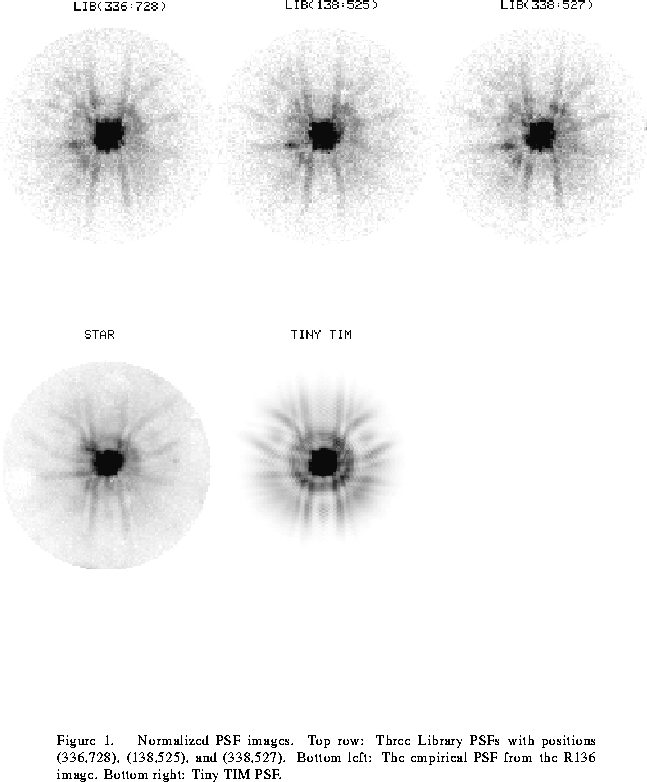
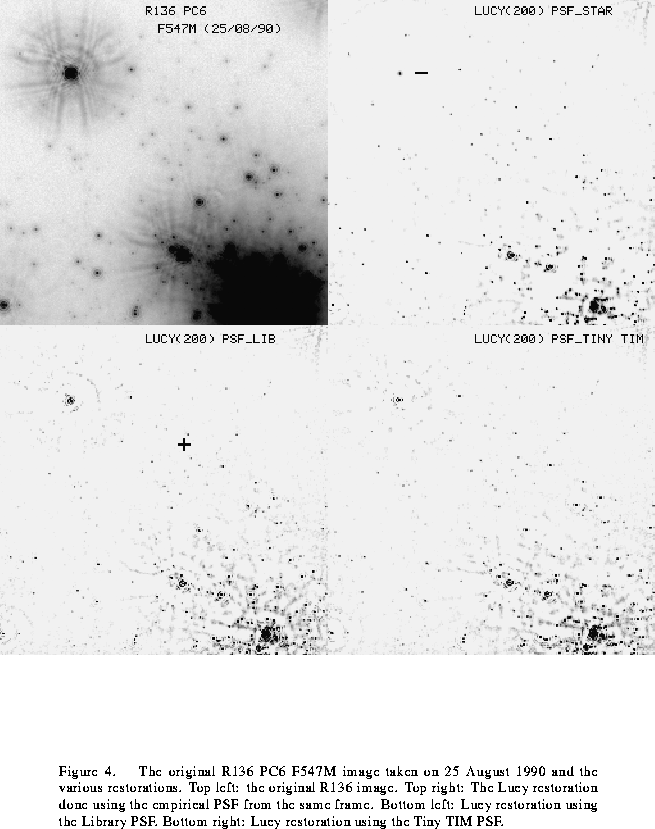
Figs. 2 and 3 show the original R136 image and the various restorations. In Fig. 2 we show the original R136 image and restorations done using the empirical PSF from the same frame, the Library PSF, and the Tiny TIM PSF. Fig. 3 shows the three restorations done using Library PSFs for various field positions. The PSF star and the location of the Library PSFs are indicated by an arrow and a cross, respectively.
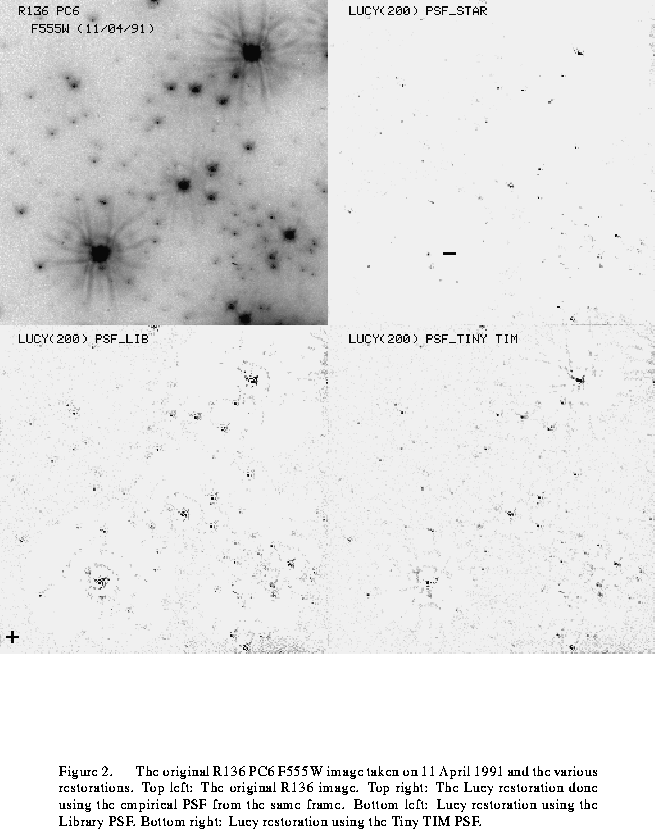
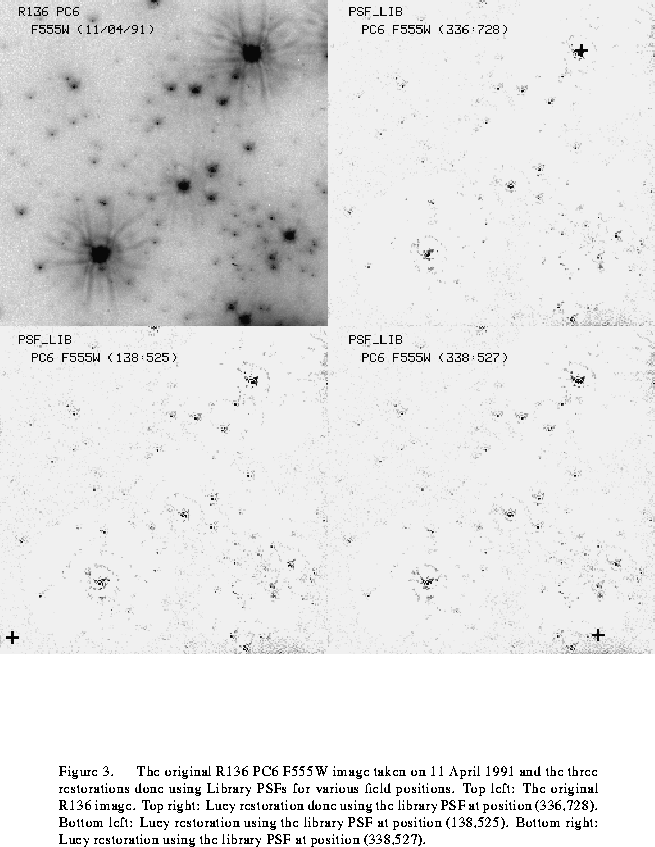
Fig. 4 shows the original image of R136 in PC6, F547M. At top right is a restoration computed using the empirical PSF from the same frame. At bottom left is the restoration computed using the Library PSF, and at bottom right is the result obtained using the Tiny TIM PSF. The PSF star and the location of the Library PSFs are indicated by an arrow and a cross.
The M87 image has no candidate star that can be used for extracting an
empirical PSF. Thus, our experiments have been based on a Library PSF for
PC6, F547M, centered on pixel (337,328), and the Tiny TIM PSF. The
accelerated R-L method reaches a reduced -square of 0.4 after
just 20 iterations. The results are shown in Fig. 5.