My Functional Work

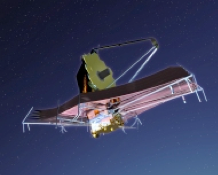
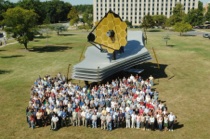
The European Space Agency (ESA) works together with NASA and the Canadian Space Agency (CSA) to built the James Webb Space Telescope (JWST). JWST, named after a former NASA administrator, is a large, infrared-optimized space telescope, currently scheduled for launch in 2018.
JWST has the largest mirror ever flown in space (6.5m diameter) and thus will be sensitive enough to detect the first galaxies that formed after the Big Bang. JWST's instruments are designed for imaging and spectroscopy at wavelengths between 1 and 28 micrometers. Because infrared light is less affected by dust attenuation, JWST will be able to peer through dusty clouds, e.g. to observe planetary systems forming around nearby stars.
The ESA contribution to JWST consists of three components:
-
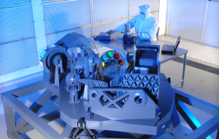
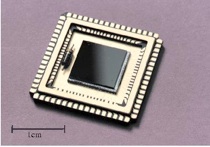
1)One of the four science instruments onboard, called NIRSpec. This is a multi-object spectrograph that is able to take spectra of up to 100 celestial objects simultaneously, using an innovative slit selection device based on microshutters.
-
2)the launch vehicle, an Ariane 5 rocket to be launched from Kourou in French Guyana.
-
3)manpower throughout the operations phase of JWST, to be organized from the Space Telescope Science Institute (STScI) in Baltimore, USA.
In addition, ESA also provides the legal framework for construction of most of the hardware for MIRI, a mid-infrared camera and spectrometer onboard JWST. MIRI is built jointly by NASA and a consortium of science institutes throughout the ESA member states.
Most of my work revolves around NIRSpec, which is currently in the last stages of construction led by the prime contractor EADS Astrium in Ottobrunn, Germany. Together with a small team of ESA scientists, I am responsible for preparing all aspects of NIRSpec operations, including science commissioning and data calibration.
Our team provides science oversight to all issues arising from the hardware development, both from NIRSpec itself and those aspects of the JWST telescope and spacecraft that are relevant for NIRSpec performance. This implies steady communication with all involved parties, incl. NASA, STScI, and the various industrial partners involved in NIRSpec. In other words, many documents, memos, teleconferences, meetings, and yes, lots of travel...