 BD 3 --- | ---
BD 5
BD 3 --- | ---
BD 5
 BD 3 --- | ---
BD 5
BD 3 --- | ---
BD 5
Gl 229B demonstrated conclusively that brown dwarfs could form - but didn't tell us how many there were. That requires larger-scale surveys - and sophisticated filtering techniques: we need to pick out a few, faint brown dwarfs from the more than 100 million stars brighter than 20th magnitude. Next
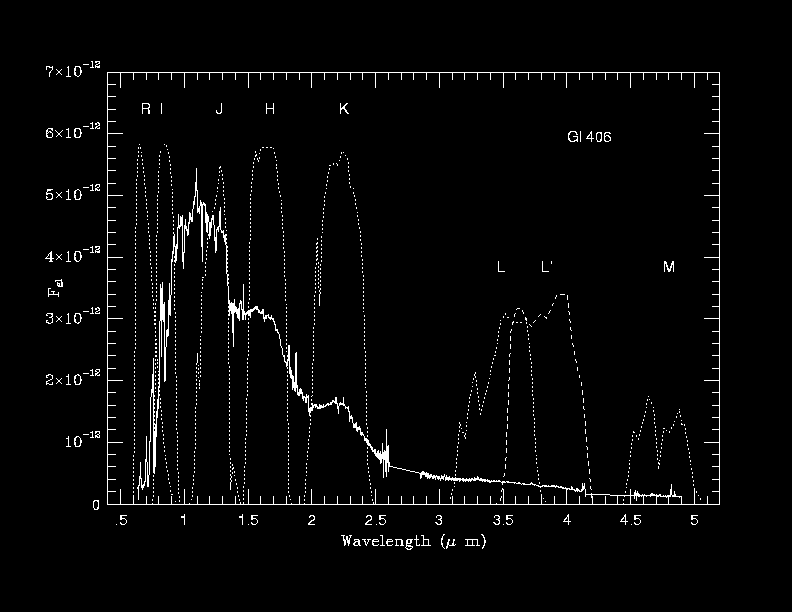
How do we find cool objects in the general field?
Search at red, or better still near-infrared, wavelengths - but
large surveys are only feasible if you have large, sensitive detectors.
Until the early 1990s, photographic plates provided the ony avenue for searching the sky -
and photographic plates don't extend far into the red, and are not very sensitive.
Recently, however, infrared arrays - sensitive at 1-3 microns - have become available, and
those developments have permitted the first deep near-infrared sky surveys: DENIS, a
European/Brazilian survey of the southern skies, and 2MASS, an all-sky survey.
Next
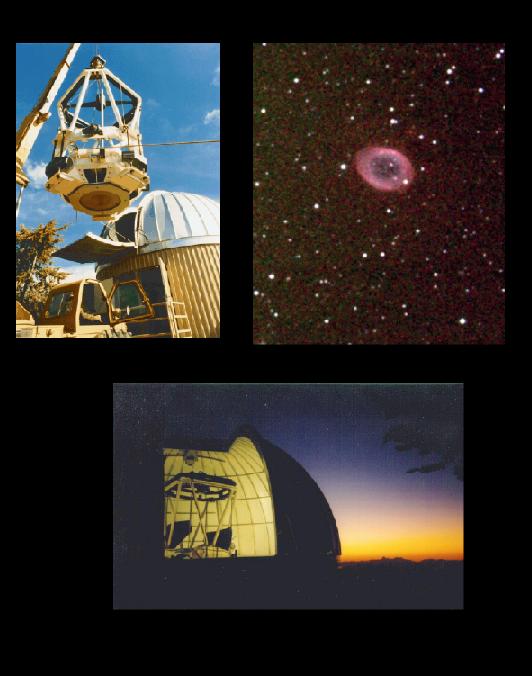
2MASS, the 2-Micron All-Sky Survey, is a project which is being run jointly
by the University of Massachusetts (hence MASS) and the Infrared Processing and
Analysis Center. The observations are being made by two 1.3-metre telescopes, the
northern at Mt Hopkins, Arizona, the southern at Cerro Tololo, Chile. These
telescopes are surveying the sky at three wavelengths:
J - 1.25 microns; H - 1.6 microns; and K - 2.2 microns. Combining
all three colours can give some interesting images Next
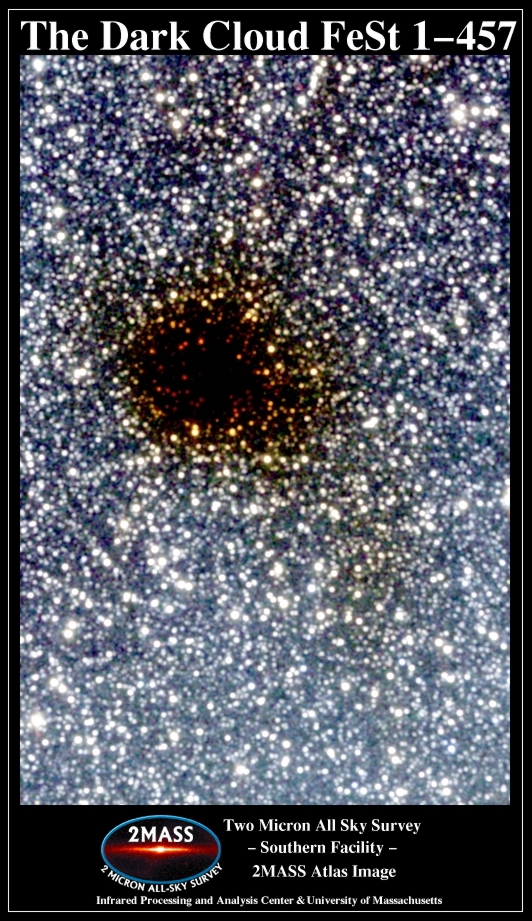
..of dense absorbing clouds in the Galactic Plane Next
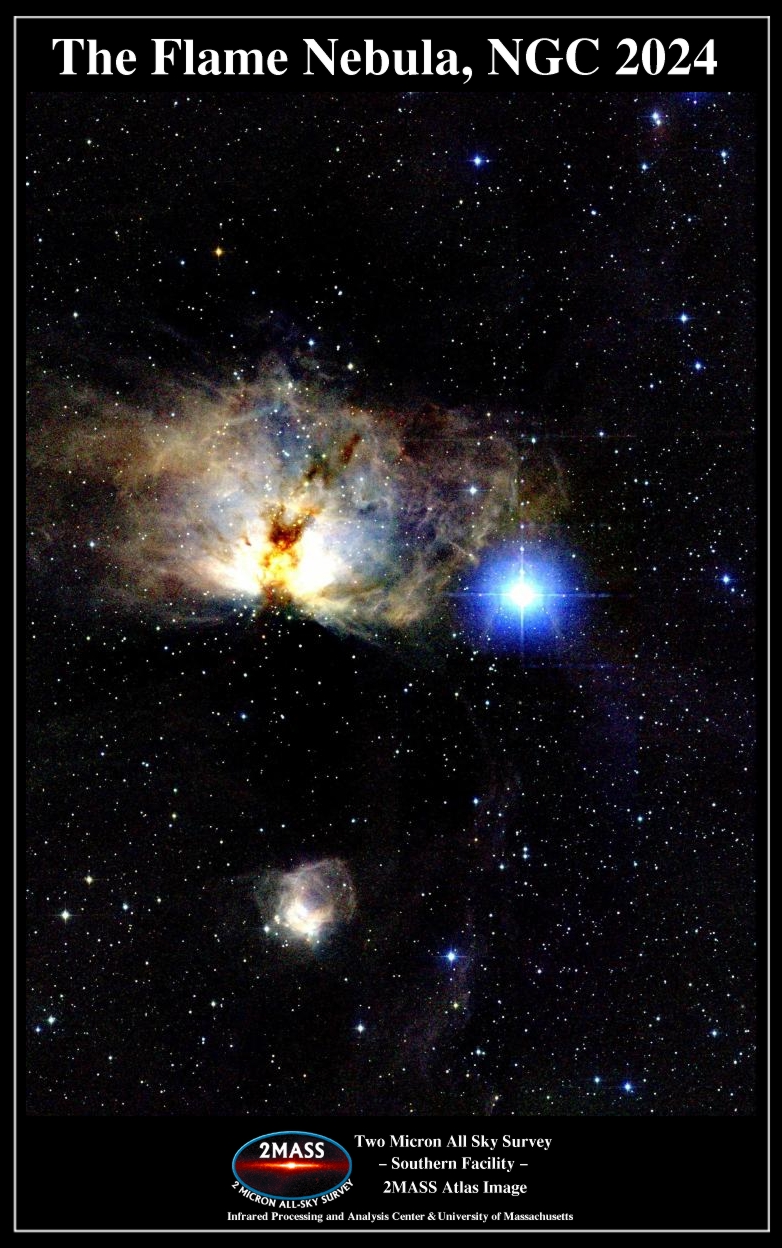
.. of star-forming regions, such as NGC 2024 in Orion, Next
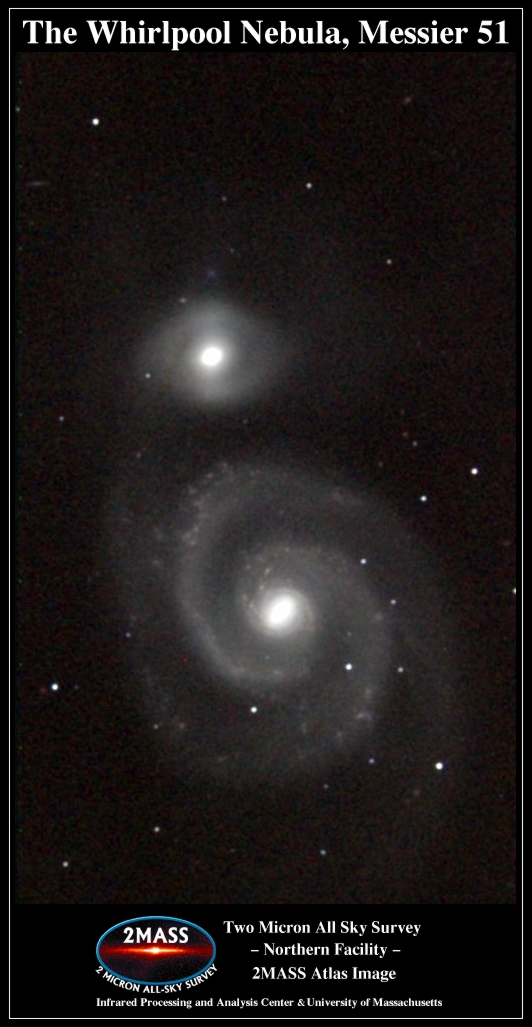
.. and even some well known galaxies.
But our main interest is in
using 2MASS to find very low-mass stars and brown dwarfs. Next
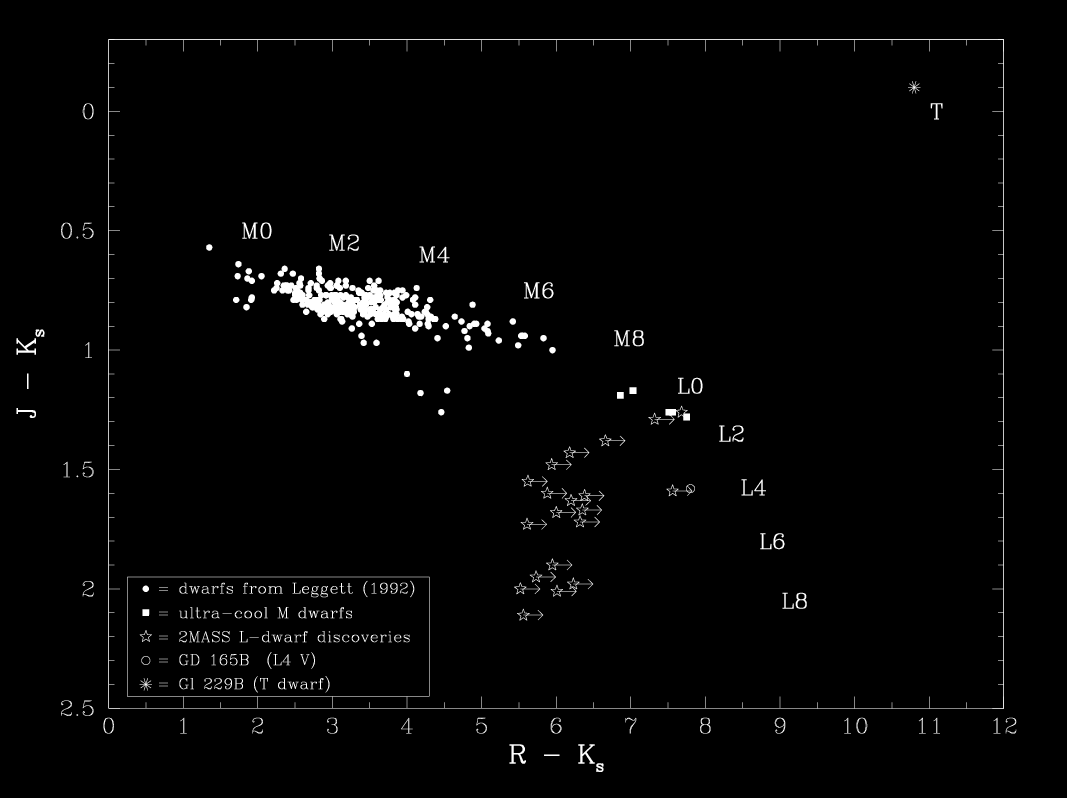
The search technique involved combining the 2MASS data with optical data from the Palomar sky survey, searching for sources which have red infrared colours and are not detected on the photographic plates (i.e. which have very red optical/IR colours). Next
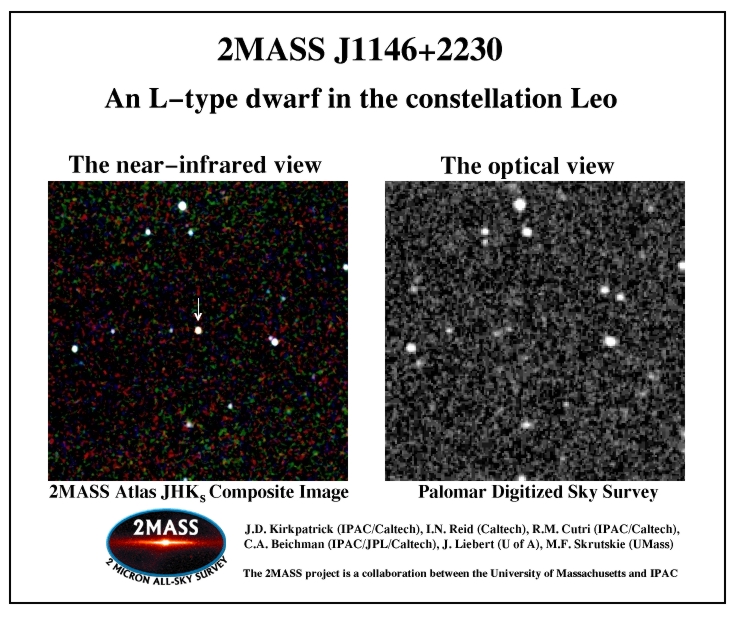
Such as this object.... Next

Our first search turned up over 50 candidates, and we used the LRIS spectrograph on Keck to check what we had. A few were misclassified stars, some proved to be very cool M dwarfs, but most were clearly cooler than even the coolest M dwarf. These are L dwarfs - the first new spectral class for dwarfs required since Annie Jump Cannon's original definition of the Harvard system. next
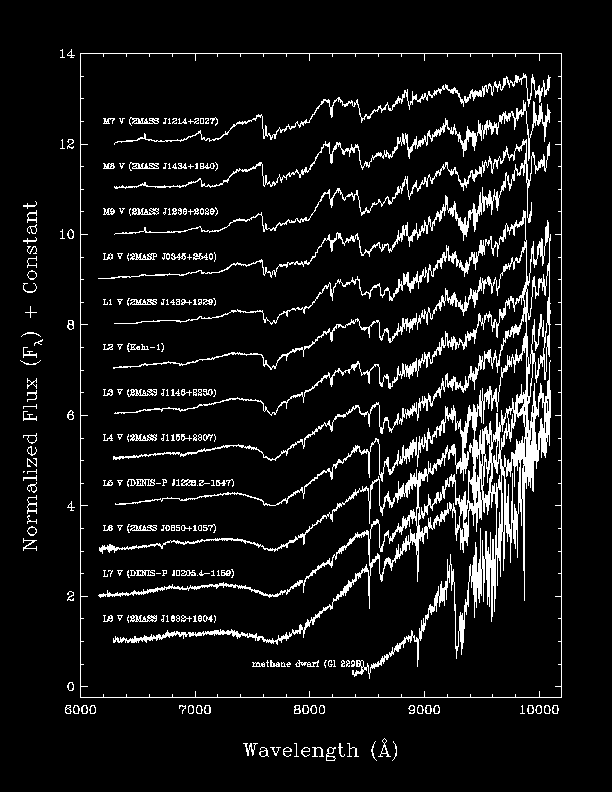
Why a new sequence? M dwarfs are classified based on the strength of titanium
oxide absorption bands - those bands decrease in strength and disappear amongst
these cooler dwarfs. Hence, we need a new classification system:
GD 165B is clearly an L dwarf, spectral type ~L4
Next
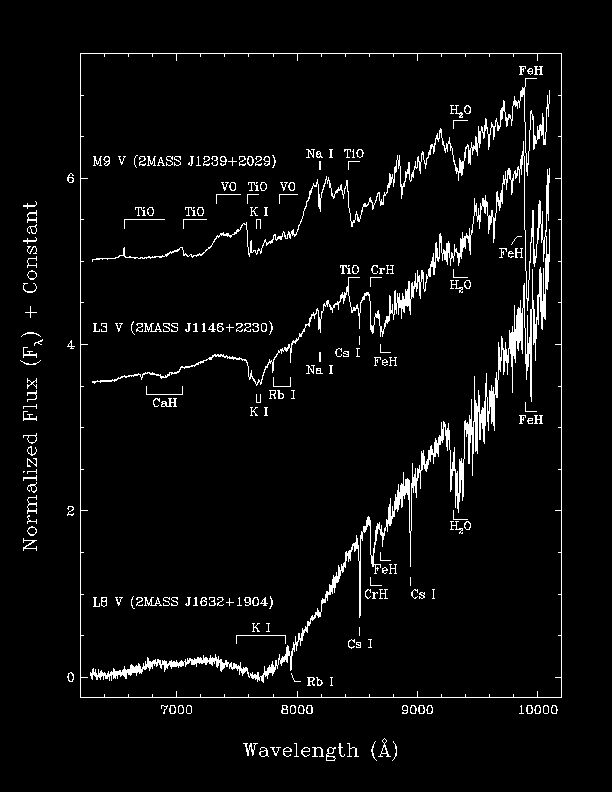
What happens to the missing titanium oxide and vanadium oxide? Those
species solidify as dust!
What's left? metal hydrides and alkalis - sodium, potassium, rubidium, caesium
The hottest L dwarfs have "surface" temperatures of
about 2100 degrees; the coolest have temperatures of only 1300-1400 degrees.
Are they brown dwarfs? Next
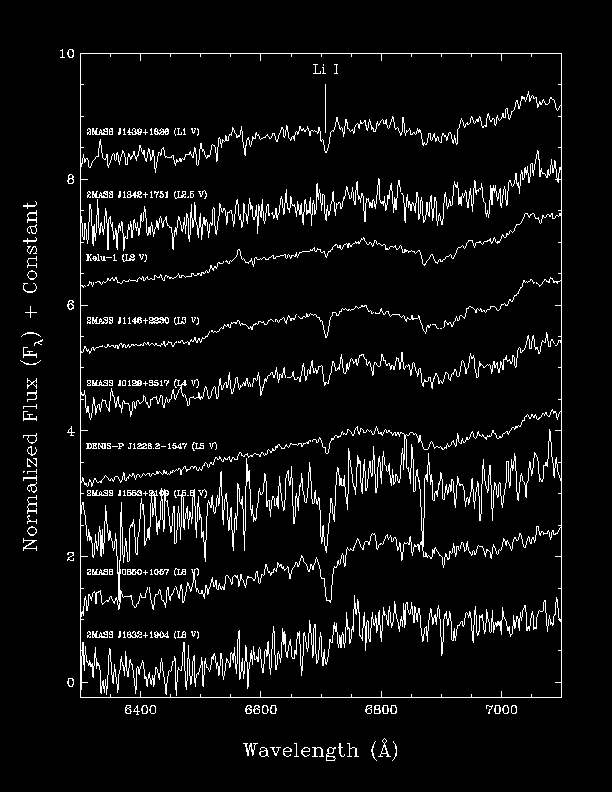
Some certainly are - since they pass the lithium test.
BD 3 --- | ---
BD 5