BD 4 --- | ---
BD 1
BD 4 --- | ---
BD 1
 BD 4 --- | ---
BD 1
BD 4 --- | ---
BD 1
By early this year, we had identified almost 100 L dwarfs through follow-up observations of 2MASS sources - but no "T dwarfs", objects similar to Gl 229B. This wasn't entirely unexpected, since the methane-rich brown dwarfs are so much cooler, and therefore much fainter - just frustrating. The infrared colours don't help - many stars have similar colours, so there there's lots of opportunity for confusion, even if we demand that no source is detected on the Palomar sky survey plates. In fact, the latter provides a very good method of finding asteroids: relatively blue near-infrared colours (reflected sunlight), and very definitely not at the same position when the Palomar plates were taken, several years before the 2MASS observations. In the event, the first T dwarf was discovered by SDSS, the Sloan Digital Sky survey.
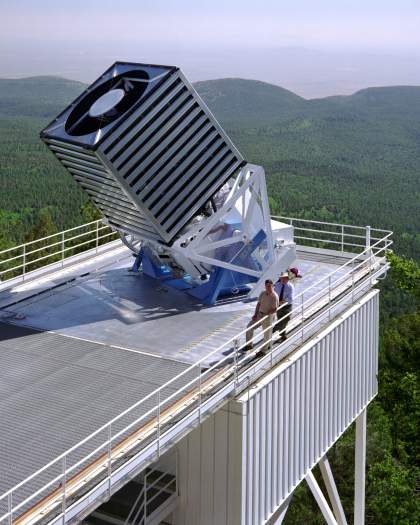
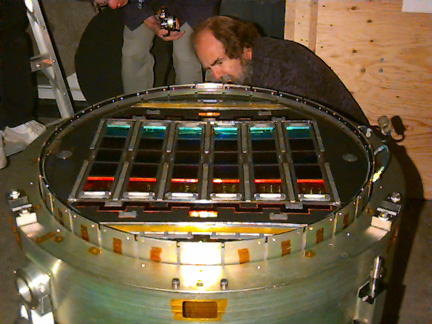
SDSS is an ambitious project which aims to determine redshifts for a million galaxies (plus 100,000 QSOs and sundry stars). As part of that survey, the SDSS camera will obtain deep, 5-colour images of one quarter of the sky. During the analysis of some of the first observations obtained during commissioning, early this year, two particularly red objects were identified. Next
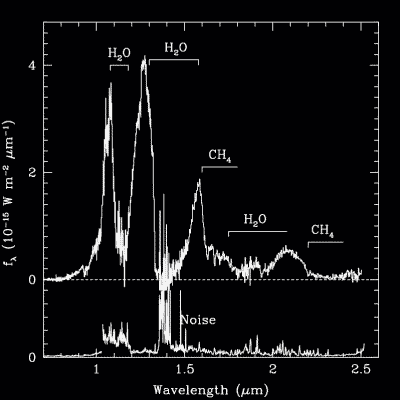
Visible in only the two reddest passbands of the SDSS camera, spectroscopy
shows that both are field analogues of Gl 229B.
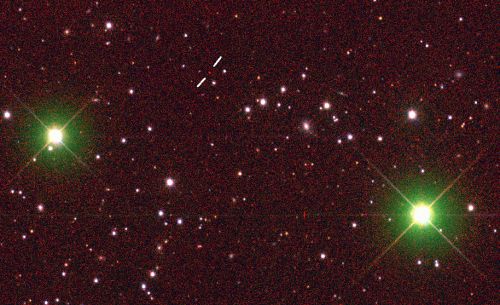
Within a week of the second SDSS detection, we had our first 2MASS T dwarf -
largely thanks to Caltech student Adam Burgasser's careful sifting through
several hundred candidates.
Next
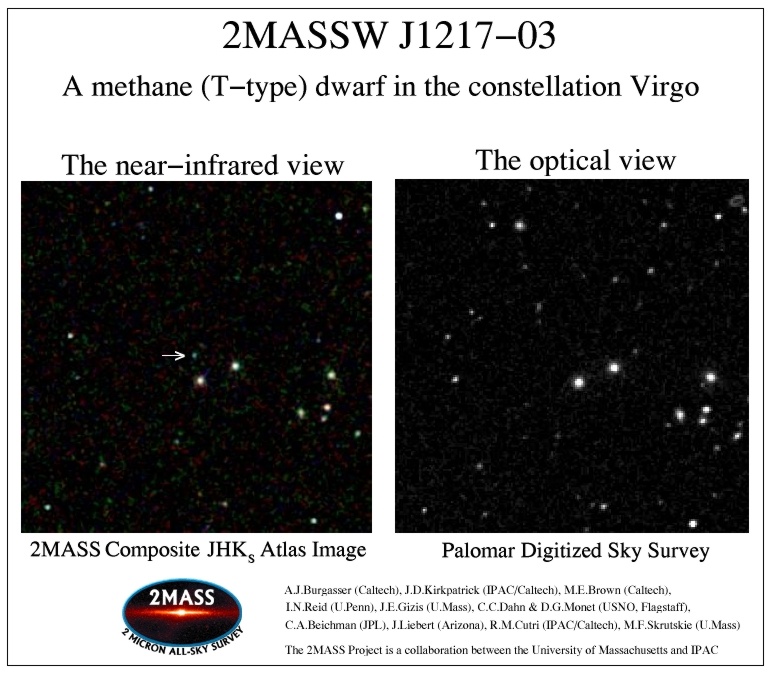
The first 2MASS T dwarf Next
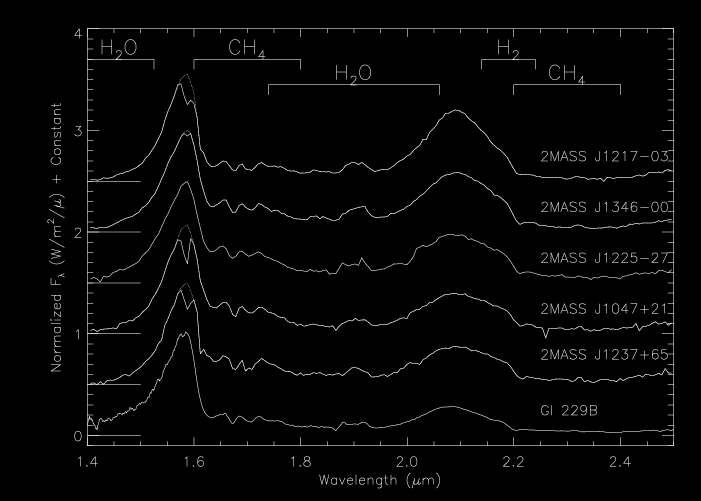
T dwarf spectra
Our current census includes 12 T dwarfs, including one which, like Gl 229B, is a
wide companion of a known nearby dwarf - and is at least 1 magnitude fainter than Gl 229B; and
one T dwarf which may well lie within 10 light years of the Sun. The coolest T dwarf
probably has a temperature of about 700 degrees - or only 4 times hotter than Jupiter.
So how many brown dwarfs are there?
It's still difficult to say exactly, since brown
dwarfs evolve so rapidly with time. However, putting together the results we have for the
field with data from young star clusters, there are probably twice as many brown with
masses between the hydrogen-burning limit and 0.01 solar masses (11 jupiter masses) as there
are main-sequence stars between 0.1 solar masses and 1 solar mass.
Can brown dwarfs solve any missing mass problem?
No - there may be a lot of them, but their individual masses are too low.
There are 7 white dwarfs within 8 parsecs of the Sun; there are probably 250 brown dwarfs:
the 7 white dwarfs contribute almost as much mass as the 250 brown dwarfs.
BD 4 --- | ---
BD 1