
OverviewIn 2012, a science team interested in studying star clusters had an opportunity to obtain funding (through the Association of Universities for Research in Astronomy, Inc., under NASA contract NAS 5-2655) for an innovative idea to create 3D prints of HST science data. The first science program that the group was interested in was one focussed on the cluster Westerlund 2, -using Hubble Space Telescope Observations, lead by Dr. Antonella Nota (STScI and now the International Space Science Institute), The 3DAstro project our team created is led by Dr. Carol Christian (STScI). The purpose was to create tactile, uniquely textured, representations of our observations. The most engaging versions of the data are the full color imagery produced by combining the observations from different filters, but our process can be used to produce 3D prints for each filter observation if desired. Our goal was to create tactile models for use by individuals with blindness or visual impairment (BVI), but we encourage use by anyone who would benefit from the use of the 3D prints to enhance interest and understanding of astronomy. Initially, we created tactile 3D representations of the star clusters and their surroundings based primarily our Hubble Space Telescope (referred to as HST or Hubble) observations as well as the data from other star cluster studies . We developed an innovative process and custom software (see Technical description below) to transform 3D visualizations of HST, JWST and other astronomical data into solid 3D tactile patterned layers using data on star clusters. For example we used the scientific data for NGC 602 and Westerlund 2 to test our processes (Gallery 1). Our ultimate goal is to produce 3D prints for objects in the universe so that anyone can experience and touch the cosmos at home, in school, in libraries and in museums. We also have produced 3D prints of galaxies from the HST LEGUS survey. Follow on projects include creating 3D tactile printes of solar system objects, exoplanets, and multi-wavelength observations of astronomical objects using data from other telescopes. Now we have embarked on producing data from the James Webb Space Telescope (referred to as JWST or Webb), and some of these observations are offered here in Gallery 3, and others are being created from data being obtained by scientists using JWST for amazing research. The 3D scientific data for an astronomical objects derived from observational data can be arranged into digital representations, each imprinted with touchable patterning then printed on a 3D printer. The textured layers and surfaces represent different components of complex star formation regions for star clusters (gas, dust, filamentary structure and stars) and for galaxies (star clusters, spiral arms, gas, dust, the bulge region and the central cusp often representing a supermassive black hole). Where does the data originate?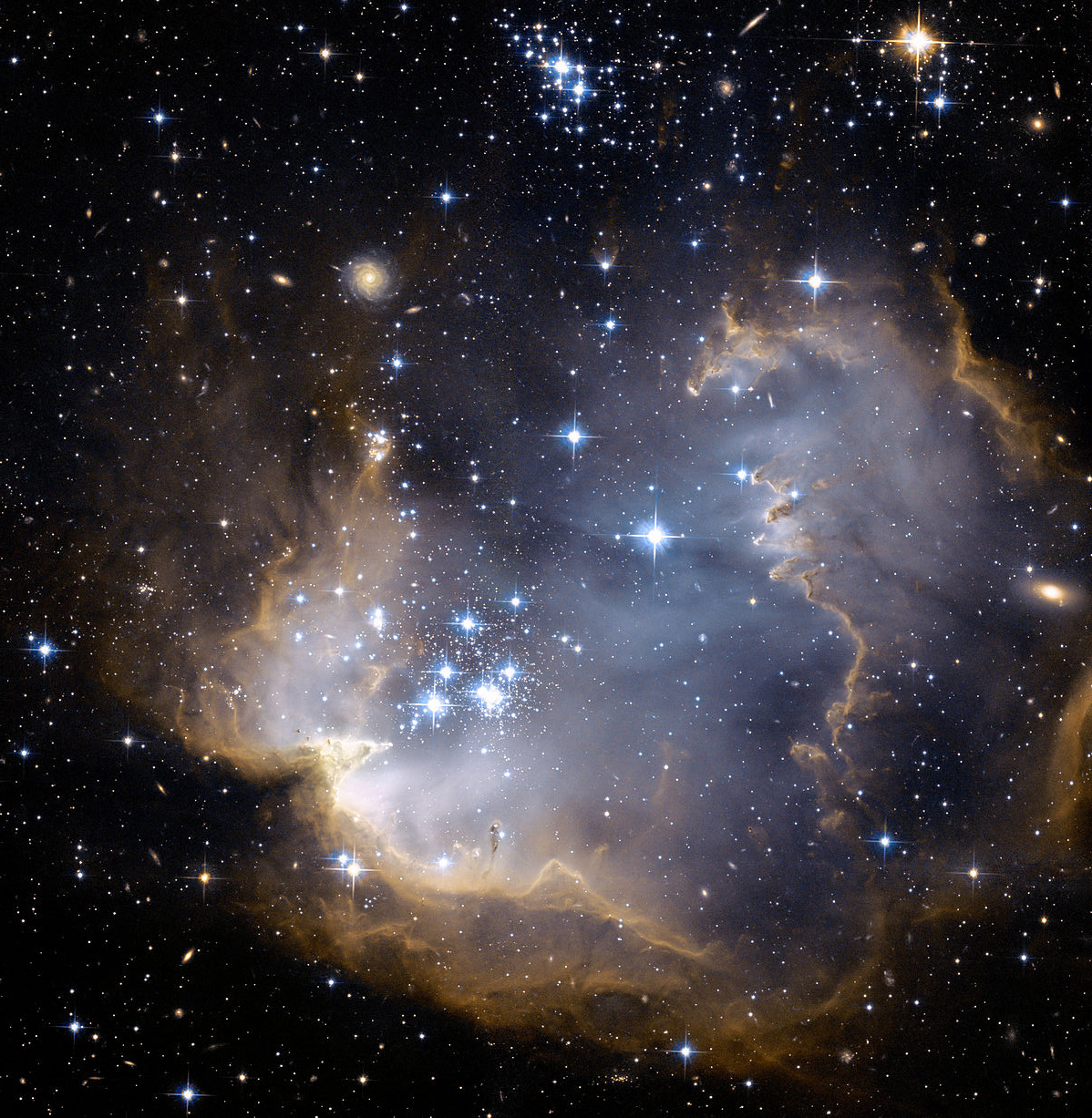 The 3D scientific data for an astronomical objects are derived from observations obtained with Hubble, JWST, and other telescopes, available through the Mikulski Archive for Space Telescopes (MAST: archive.stsci.edu) . The analysis of NGC602 was arranged into digital textured layers and surfaces representing different components of the complex star formation in the cluster. Similar data from press releases (Hubblesite and Webbtelescope) for HST and JWST star clusters, nebula and galaxies are in the MAST archive, published in scientific literature and which inform the Press Releases. Data for planets comes from other satellites and also some astronomical observatory observations including HST and JWST. Sometimes the prints must be split in pieces, printed, and then fitted together so they are large enough for exploration by touch. Major accomplishments
Galaxies and Nebulae Other objects ObjectivesWe are creating custom innovative processes to transform imagery of astronomical objects into 3D tactile printouts. The production pieces are aimed primarily at individuals with BVI who do not usually have an opportunity to experience Hubble Space Telescope imagery, or any astronomical imagery or visualizations represented as imagery. Secondarily the 3D printouts can be used by any individual especially those who appreciate tactile learning methods.We strive to improve public understanding of astronomy and science in general contributing to Science, Technology, Engineering and Mathematics skills for youth and any interested individual. Deliverables
Collaborations
|
|
|


