


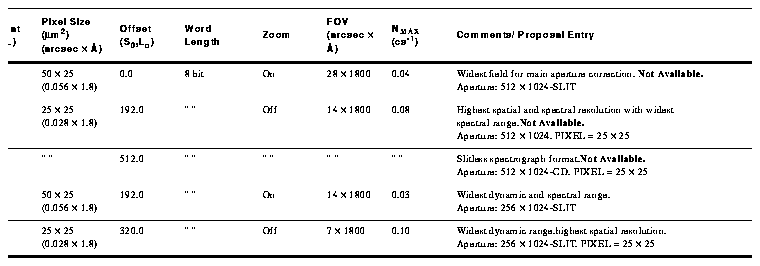
Only a small fraction of all the possible observational modes allowed in principle by the FOC will find practical astronomical application and, therefore, be accurately and extensively understood and calibrated prior to use. Table 5.1 lists the main characteristics of the standard imaging and spectrographic observing modes are available for the F/96 and the F/48 relays. The first column in this table gives the format size (SL), the second the pixel size in microns and arcseconds squared in the sky, the third the starting pixel (S0, L0), the fourth the word length, the fifth the zoom configuration, the sixth the overall field of view in arcseconds squared for that format, the seventh the maximum count rate per pixel NMAX for that format (see "Uniform Illumination" on page 66), and the last column lists the main scientific justification for the selection, the mode names used in the Proposal Instructions for HST, if appropriate, and the proposal entry required for that format. S0 is given in the 1-1024 range on a dezoomed extended format.
For the spectrographic modes of the F/48 relay, the pixel size and the FOV are given in units of arcseconds Angstroms in first order. The pixel size (selection 5 in the list above) is considered an optional parameter in the Phase II Exposure Logsheet of the ST Proposal Forms. The default value, if none is specified, is 25 25 microns squared for imaging and 50 25 microns squared for spectroscopy. The position and orientation of the target in the aperture (selection 8) should be specified in the Special Requirements column of the Phase II Exposure Logsheets using the POS TARG and ORIENT commands.
Table 5.1: F/96 IMAGE or OCC Modes.
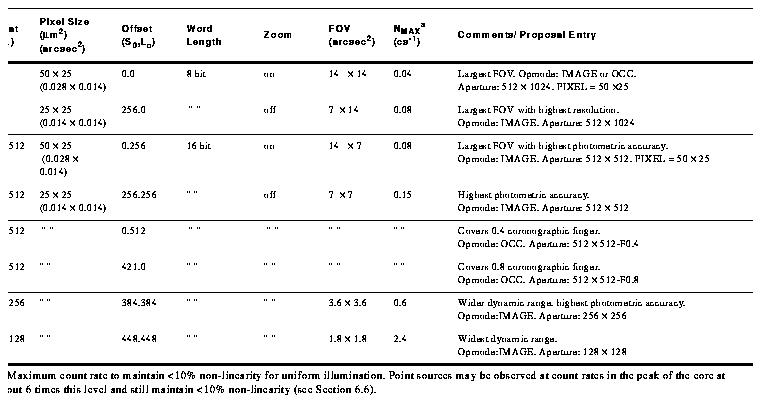
Table 5.2:
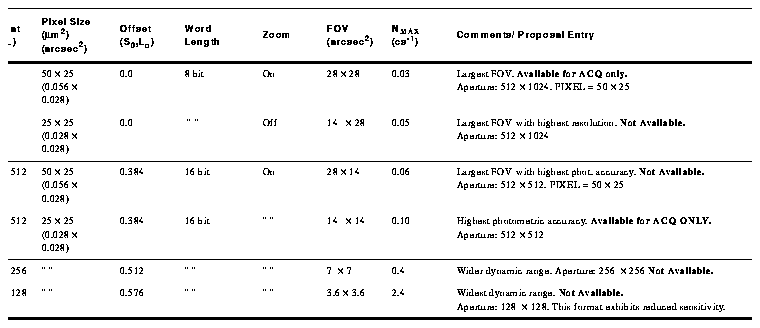
F/48 Image ModesTable 5.3: F/48 SPEC Modes
Generated with CERN WebMaker