
  |
Jupiter. This is an HST image of Jupiter (upper). The lower image is of a 3D print of Jupiter (from the top) and the print stl file. This tactile version was made by starting with the HST image and then enhancing it with our custom textures that are discernable by touch.
Jupiter Print stl file [download]. |
  |
Earth. Image of Earth from Space is the top image. Topographic satellite data including oceanic mapping data were used as well as manual textures for moutainous regions to make features more discerable with touch. Topographic Earth with textures stl file [download]. |
  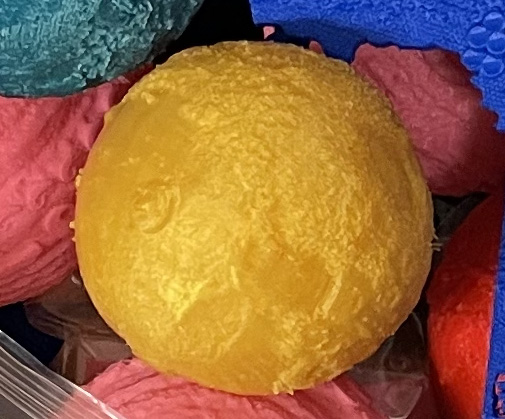  |
Mars. Images of Mars, the 4th planet from the Sun, show many features. In the image to the left which is a sharp, natural-color view of Mars from the Hubble Space Telescope reveals several prominent Martian features. This image includes the largest volcano in the solar system, Olympus Mons; a system of canyons called Valles Marineris; an immense dark marking called Solis Lacus; and the southern polar ice cap. Mars 3Dprints |
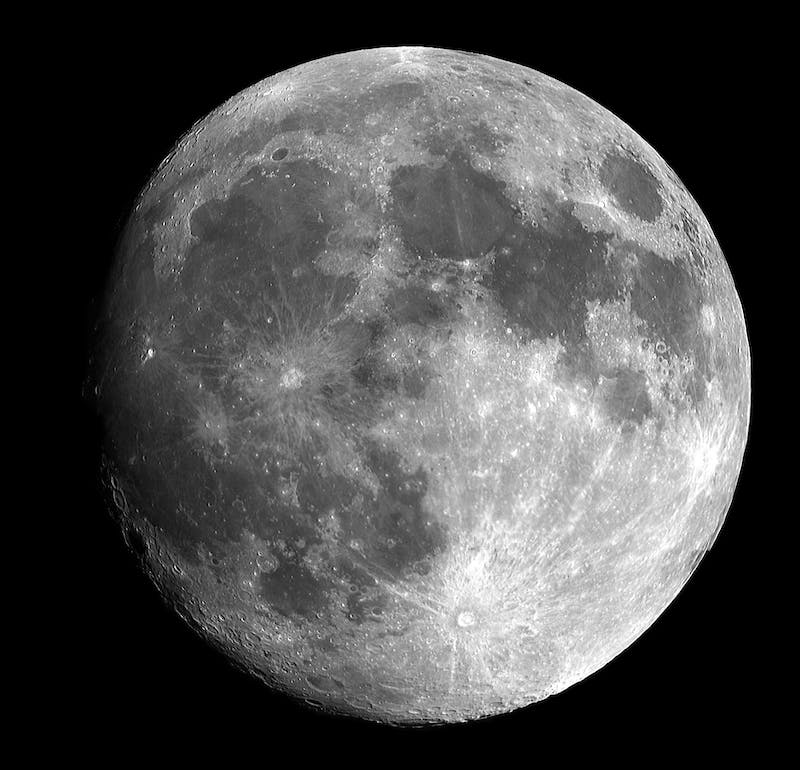  |
The Moon. Image of the Moon, the Earth's only natural satellite. It is a rocky, cratered object, which is tidally locked to the Earth at this time, so one face is visible from Earth. The far side of the Moon is visible only to cameras and humans aboard spacecraft that have orbited it. More about the Moon and an interactive NASA site (use Chrome browser) Moon 3Dprint |
  |
Hot Jupiter Exoplanets. Artist's conceptions are shown for Jupiter-sized exoplanets (planets in other star systems) surveyed with the Hubble and Spitzer Space Telescopes. These surveys have continued, and as techniques have improved, the chemistry of such objects has been revealed, and even smaller planets - Neptune sized all the way down to Earth sized - have been observed. A long-standing mystery – why some of objects seem to have less water than expected and others might be plentiful was solved. These particular planets called hot Jupiters (which orbit very close to their stars - so they are hot) are apparently cloud-free. Therefore show strong signs of water. Alternatively atmospheres of other planets with faint water signals also contained clouds and haze – both of which are known to hide water from view. Link to more about these surveys of exoplanets The lower image shows a 3D print of a textured hot Jupiter exoplanet, based on the various artist's conceptions. Hot Jupiters, like the planet Jupiter in our solar system, have banded atmospheres, likely stratified by different circulation speeds and given different appearance depending upon composition. Therefore the textures represent different bands, not actual images of exoplanet atmospheres. Model exoplanet 3Dprint |
  |
Wasp-39b Tidally Locked Exoplanet. Artist's conceptions of the exoplanet Wasp-39b in close proximity to its parent star, Wasp-39. This object is Saturn sized but has three times the amount of water compared to Saturn. This is unusual since it is so close to its star. It is so close to the star, similar to the Sun, that it orbits in 4 days. It is tidally, locked, meaning one side faces the star all the time. Probably this planet migrated in from the outer region of its star system, where water may have been more plentiful and not scortched off the surface. Strong winds circulate from one side to the other. The data was obtained with the Hubble and Spitzer Space Telescopes. Model tidally locked exoplanet 3Dprint |